

Business Travel 101: It’s Not Supposed to Be Glamorous
So you’re being asked to travel for work? Even if you’re not in an Uber, buckle up.

The jet set lifestyle - sitting in first class, sipping champagne, while you jet from one office to another. Being chauffeured from airport to luxury hotel to office to fancy dinners in your finest business casual. You’re a VIP and you’re driving shareholder value on the road.
The reality looks much different - last-minute flight bookings leaving you in the middle seat in the back of the plane after having to gate check your bag. Byzantine layouts of airports in unfamiliar cities leave you walking for what feels like miles before getting into an Uber whose roadworthiness leaves a bit to be desired (does this state require annual inspections?) A hotel that gives you a great view of a parking lot or - if you’re lucky - the HVAC units of a building next door, because that’s the only place that satisfies your company’s per diem.
It’s business travel in 2025, and it’s not supposed to be glamorous.
Hit the Road, Jack
If you’re in client services and your client is not in your immediate metropolitan area, you will likely be called upon for some quality face time. This could be for a quarterly business report, strategic planning sessions, or just for some regular catch-ups. In any event, it’s time to hit the road.

Most large corporations have done their very best to infuse the travel booking process with more bureaucracy than your local DMV. You’ll put in your dates and cities and get back a list of flights and hotel options that barely resemble reality. Delta told you there were seven flights out the morning you need to leave? Your company’s portal shows two, one of which doesn’t seem to exist anywhere else on the open web.
And the hotel options? They’re there - but whoever came up with the per diem amounts did so in the ‘80s and is unfamiliar with the relatively little-known economic theory of inflation. Staying in New York City? Good luck finding a safe, clean hotel in a decent neighborhood on the island of Manhattan for under $300.
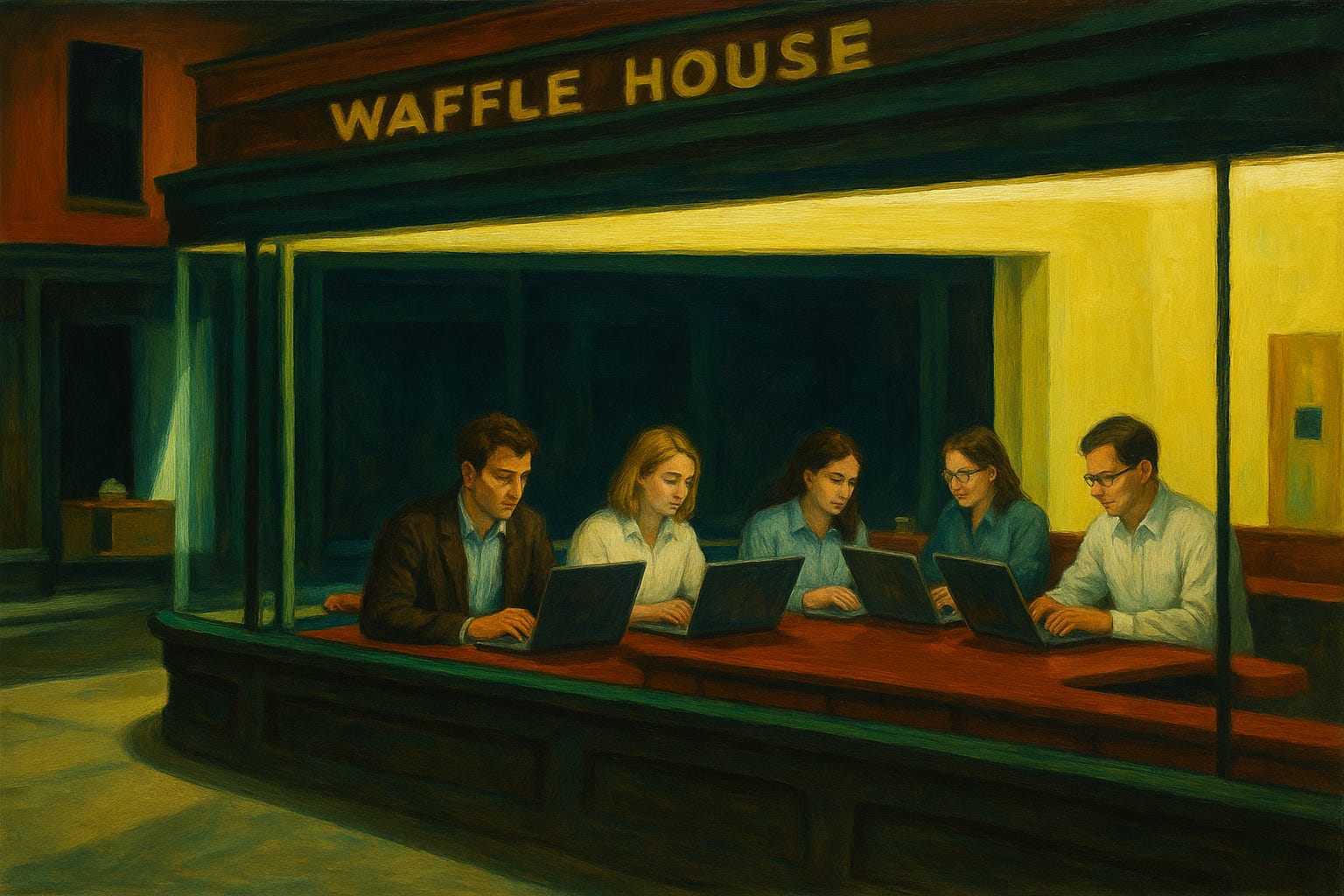
And those fancy dinners? If you’re with clients, your company will spare relatively little expense to make sure they’re well-fed and entertained. Dining solo or with colleagues? Hope you like Waffle House or the McValue Menu (there’s a company that understands inflation for those of us old enough to remember the vaunted Dollar Menu.)
If You Liked the Booking System, You’re Going to Love the Expense Portal
There are very legitimate reasons that you have to pay a fee to introduce an extra layer of a web search for travel: the company needs to track business expenses and ensure no one is abusing the system. Corporations can write off business travel for tax purposes, and it’s pretty important that they do it accurately to avoid this little thing called tax fraud.
But like a lot of well-intentioned business initiatives, it has run amok. When I first started traveling, we were required to show a scan of our physical boarding passes to show we actually traveled. I have tried to work out how one would be able to defraud the company after booking through the portal and somehow not showing up to the client and pocketing the money. I truly don’t get it, and if any readers in fraud departments know how this scheme would theoretically work, I would love to understand (for research purposes only, of course.)
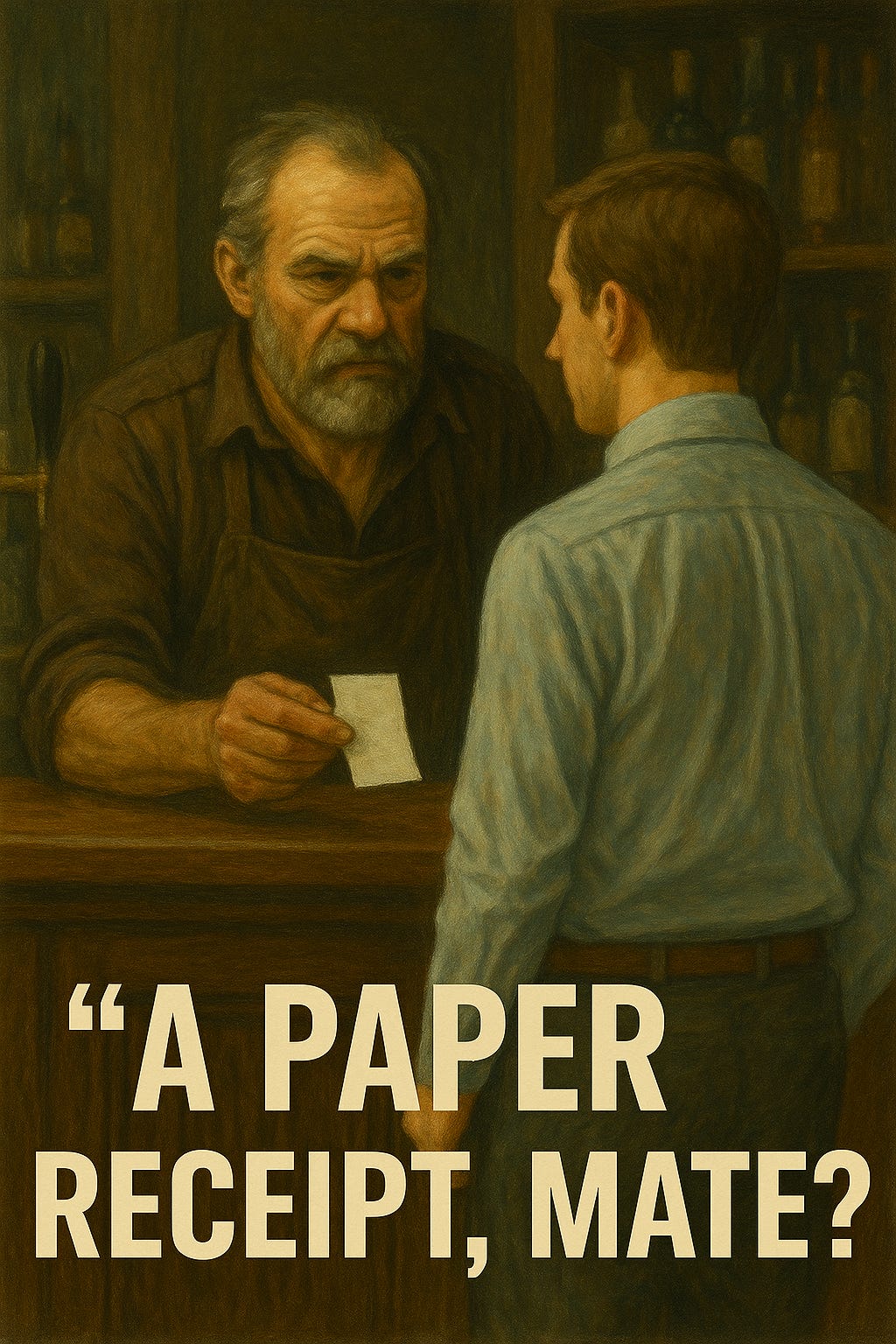
With the advent of travel apps, the PDFs of crumpled up boarding passes is over (though we had some interesting overlap of screenshotting app-based boarding passes), but that doesn’t mean that innovation in the onerous expense reports realm has stopped. I’ve personally seen shops go from “Credit card receipts are fine,” to “I’m going to need the CC receipt, the itemized receipt, and any other artifacts that were created in the transaction.” Good luck traveling in Europe, where it’s Apple Pay or GTFO (if it’s £7 and change, just assume it was a pint Mr. CFO, because I was scared to ask the publican for a paper receipt.)
Another frustrating part of the expense report process is that unless you’re on a corporate credit card, you are floating your company an interest-free loan until you get paid back. While in theory you could point to the credit card points you get as interest, it’s nowhere near the prime rate so you are kind of getting hosed.
Start Stretching Now, Because You Need to Be Flexible
Anyone working in the professional services industry today knows that calendars are an unmitigated disaster. Meeting culture is entirely out of control and one shift of a 30-minute meeting can ruin an entire day. The stakes are higher when hours-long flights and transportation is involved.
When booking personal trips, we often do them weeks or months in advance, pick the prime seats we’d like the on the plane, and research the hell out of local things to do and how to get to and from various places. Business travelers typically do not have that luxury.
You’re lucky if you get a couple of weeks out. I’ve set up our booking system to ask for aisle seats, but if you book late (or change the morning of because a certain airline keeps having inexplicable problems with their metal) you likely are going to make some friends sitting in the middle seat. Which also makes it difficult to get work done on your computer, both from a space perspective, but also a privacy one (you never know who you’re sitting next to.) This point becomes moot if another certain airline can’t get their WiFi working in 2025.
I’m not bitter.
It’s Not All Bad
Don’t take this rant post as saying business travel is all miserable - I’ve seen parts of the country and the world I wouldn’t necessarily have if I were picking and choosing. Travel expands our minds and perspectives, and getting outside of your regular day-to-day, even if it’s being a desk jockey somewhere else, still counts.
And there are tips and tricks to making it more bearable. Some may seem obvious, others may be relatively unique from a person whose pedantry and desire for control are unrivaled amongst many of his peers. In either event, here are TDNBW’s recos for business travel (Amazon links kick back to the newsletter):
Stay Loyal
If you know you’re going to be traveling at a decent cadence for the next year or so, it makes sense to consolidate across a single hotel group or a single airline to see if you can hit status and make flying or staying at a hotel a little less miserable. Check to see if your company has preferred airlines or hotel partners (most do) and try to find the best options for them if you know you’ll be in one city for the year.
It would be beneficial to understand which airline has a hub in the city you’re going to. If your flight ends up getting delayed (and it will), the airlines that operate a hub in that city will have many more options (and thus capacity) to get stranded travelers out. Also, ask people who have traveled there before their preferences - there’s likely plenty of institutional knowledge within the company, so use it to your advantage.
Keep It Private
This is one of the biggest unforced errors I see when in transit or traveling for work: privacy screens. I have seen inside information I should definitely not be privy to on the Metro North and on various flights because it’s simply out in the open on computers and phones. Loose lips sink ships; tighten up your kisser with some privacy screens.
I use this one for my phone, and this one for my computer. So far I’ve not been called into HR for leaking crucial info.
Stay Energized
Staring at your phone as you try to get an Uber after a multi-hour flight into an airport you don’t really know can be stressful enough. Doing it on 5% battery is like playing Russian Roulette. Grab a battery backup to avoid getting stranded with no phone. I find the batteries that have cords built into them a little more convenient and less likely to be utterly useless as a fully charged battery with no or the wrong cord. This is Wirecutter’s reco.
Duplicate Your Home Office
If you’re traveling a lot, you’re not going to want to pack up your charging cords and wireless mouse every time you need to hop on a plane or train to a client. This newsletter keeps a bag of cords, battery backup, and a wireless mouse in his backpack so I don’t have to think twice about having a mini home office at a client’s or at a hotel.
It may not seem like a big deal, but I actually travel with two charging cords: one three-foot one and one ten-foot one. You dont want to sit on an airplane with extra cord everywhere as you get some juice from the on-board outlets. But you also don’t want to get to the hotel to find one outlet in the most inconvenient place in the whole room for working. Is this overkill? Maybe, but I also haven’t had to sit next to an outlet on a dirty hotel carpet to get work done on a laptop with low battery.
The pièce de résistance in my travel home office arsenal is my wireless mouse. I was once overseas on a trip where I got last-minute client feedback that required a ton of PowerPoint formatting. I only had the trackpad on my laptop, and my jet-lagged brain struggled to get the formatting right in the time I wanted.
After that fun experience, I splurged and bought a travel mouse that can go across essentially any surface, because you never know what the airport bar or the hotel desk is going to be made out of. I’ve had this one for years and have yet to find a surface it can’t accurately read, so I can line up the logos in my PowerPoint just right.
Stay Active
Sitting at an airport and then on an airplane can be a maddening experience for your body. I always find myself not only somewhat tight and sore from long flights, but also with a lot of pent-up energy. If I’m staying somewhere longer than one night, I tend to pack shoes and workout clothes to hit the gym either the night I check in or the next morning before heading to the office.
If you’re on a long-haul flight and expected to get trucked by jet lag, exercise is even more critical. But in order to work out at your hotel, you need to book a hotel with a serviceable gym. I’ve found hotelgyms.com to be a decent resource - it’s crowd-sourced reviews and pictures from actual travelers so you can go beyond the fish-eye lens used by the property and understand if the gym will be usable when you get there or is just window dressing for the review sites.

So Much More
This post could go on for days, but this newsletter also assumes you already have things like luggage, a solid backpack, noise-canceling headphones, and any other gadget that helps with the daily commute.
Bring It Home
Business travel - like most travel - gets a little worse every year. But with some good planning and a couple of key practices to make the most of it, it doesn’t have to be utterly miserable. It might even be interesting. But there will be times it sucks and it’s important in those moments to just go with the flow, plug your phone into your battery, and watch another episode of whatever your comfort show is, without the prying eyes of your fellow stranded travelers.
Grab Bag Section
WTF Netflix: Netflix announced it will be purchasing Warner Bros streaming service, which includes HBO Max, in a megadeal that will reshape Hollywood. There are a lot of arguments against this, not the least of which is that this kind of consolidation will lessen the output of the two major content creators. This newsletter leans towards HBO Max’s original content moreso than Netflix, so we weep a bit for that alone.
But the major alarm bells going off here at TDNBW are those related to the classics. Even before this anticompetitive deal was announced, concern about Netflix’s ability to preserve old Hollywood were rife and justified. One of HBO Max’s best offerings was the TCM section. Old Hollywood (and cult classics from more recent decades) thrived here, and it was hard to go wrong. I was able to discover classics like Mutiny on the Bounty as well as newer films like The Outsiders. It’s exactly these kinds of films that will suffer in a consolidated, algorithm-driven environment (despite being distributed by WB, the latter is not available on streaming.)
See, Netflix doesn’t want to pay for residuals when it can just pump out owned content that does better in the algorithm and sits better with audiences who have trouble keeping up with proper dialogue while on their second screen for an entire movie.
But Matt, you ignorant slut, you might be saying - why should everyone be subject to your old ass tastes in movies, which aren’t as profitable anymore because of market dynamics? And this is the rub: they shouldn’t, but people like me who enjoy classics and movies made before the Nixon administration should have the option to watch them and not get drowned out by K-Pop Demon Hunters. HBO Max’s TCM section was a little slice of old Hollywood heaven that many fear will disappear so that Ted Sarandos - whose 2024 $62mm salary was over two-thirds paid out in stock - can pocket more money.
The solution? In regular times I’d say call your representative, but Sarandos is no dummy and has already cozied up to everyone’s favorite neofascist in chief. One way around this is an idea I got from a friend of the newsletter (we do not out people who subscribe as to protect the reputations of the innocent.) He said it’s time to start buying physical media again, and I couldn’t agree more. This newsletter already owns a DVD player for movies that never seemed to be on streaming (seriously, when’s the last time What About Bob? popped up in the “For You” section of any service?) That will come in handy as I start a strategic classic movie reserve in my basement. Ben Mankiewicz is invited over anytime, as long as he introduces the movies for us.
Album of the Week: In honor of the new documentary coming out on (sigh) HBO Max, I dove into the Counting Crows debut album August and Everything After.
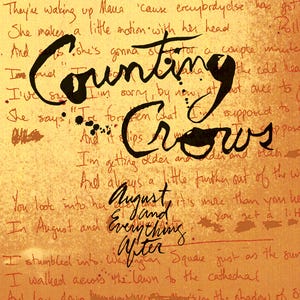
Obviously, you can’t talk about this album without talking about the standout track “Mr. Jones.” It’s what catapulted the band to fame and actually ended up being both a gift and a curse for lead singer Adam Duritz, who wrote the song about a night out with him and Marty Jones, a bassist from his first band The Himalayans, and how they strived to be famous.
The track did make Durtiz famous, but at a cost. He suffered mental breakdowns from the fame, which exacerbated the dissociative disorders that he had before the limelight. If anything feels like unreality, being famous in America has to be up there.
Another irony of the track is that it was an extremely difficult one to make. Legendary producer T Bone Burnett had to swap out drummers to get the percussion right, and it took Duritz over 100 takes to finally nail the vocals. Worth it, certainly, but no overnight success.
But the album didn’t only do well because of “Mr. Jones.” The intro of “Round Here,” which actually pre-dates the Counting Crows and is from Duritz’s days with The Himalayans, is a nice and easy way into the album (The Himalayan’s version is much more bass-heavy and faster.) “Omaha” as the second in a 1-2-3 punch with “Mr. Jones” at the end is one hell of a way to start an album.
Take a trip back in time to the early 90s and give The Counting Crows debut album a spin, no expense report or PDF of a boarding pass required.
Quote of the Week: “You know what capitalism is? Getting fucked!” - Tony Montana, Scarface (1983)
AI Usage in This Post
Other than the images in this post (and I have to hand it to ChatGPT on the Hopper-inspired one), this post is AI-free.